
Best Newborn Soothing & Comfort Picks Canada 2026 — 3 Picks from 72,000+ Parent Reviews
It is 2am, the baby will not stop crying, and every new parent asks the same question in the dark: is something actually wrong, or does this pass? Three of the most-reviewed comfort items on Amazon.ca answer three different versions of that question — a pacifier for a baby who just needs to suck, a gas passer for trapped wind that massage will not shift, and a cheap thermometer for the moment you need to rule out a fever. We summarised 72,000+ verified Amazon.ca parent reviews across the three. Three tools, three honest verdicts, and the order to reach for them.
The short version, if you only want one sentence: reach for the Philips Avent Soothie first for ordinary fussing — it is the pacifier most North-American hospitals hand out and the one breastfed newborns are most likely to accept — keep the Safety 1st 3-in-1 Thermometer in the drawer so you can rule out a fever in under a minute, and keep a box of Frida Baby Windi for the gas cries that massage and bicycle legs do not touch.
The 3 picks at a glance
Each pick answers a different cry. Skim the table, then jump to the one that matches tonight.
| Job | Pick | Price (Amazon.ca) | Reviews | Parent verdict |
|---|---|---|---|---|
| 🍼 Best for settling a fussy newborn | Philips Avent Soothie Pacifier | $10.76 CAD | 62,942 | 8.8 / 10 |
| 🌡️ Best for ruling out a fever | Safety 1st 3-in-1 Nursery Thermometer | $10.97 CAD | 6,660 | 8.5 / 10 |
| 💨 Best for trapped gas | Frida Baby Windi Gas Passer | $16.94 CAD | 3,327 | 7.8 / 10 |
🍼 Best for settling a fussy newborn: Philips Avent Soothie Pacifier
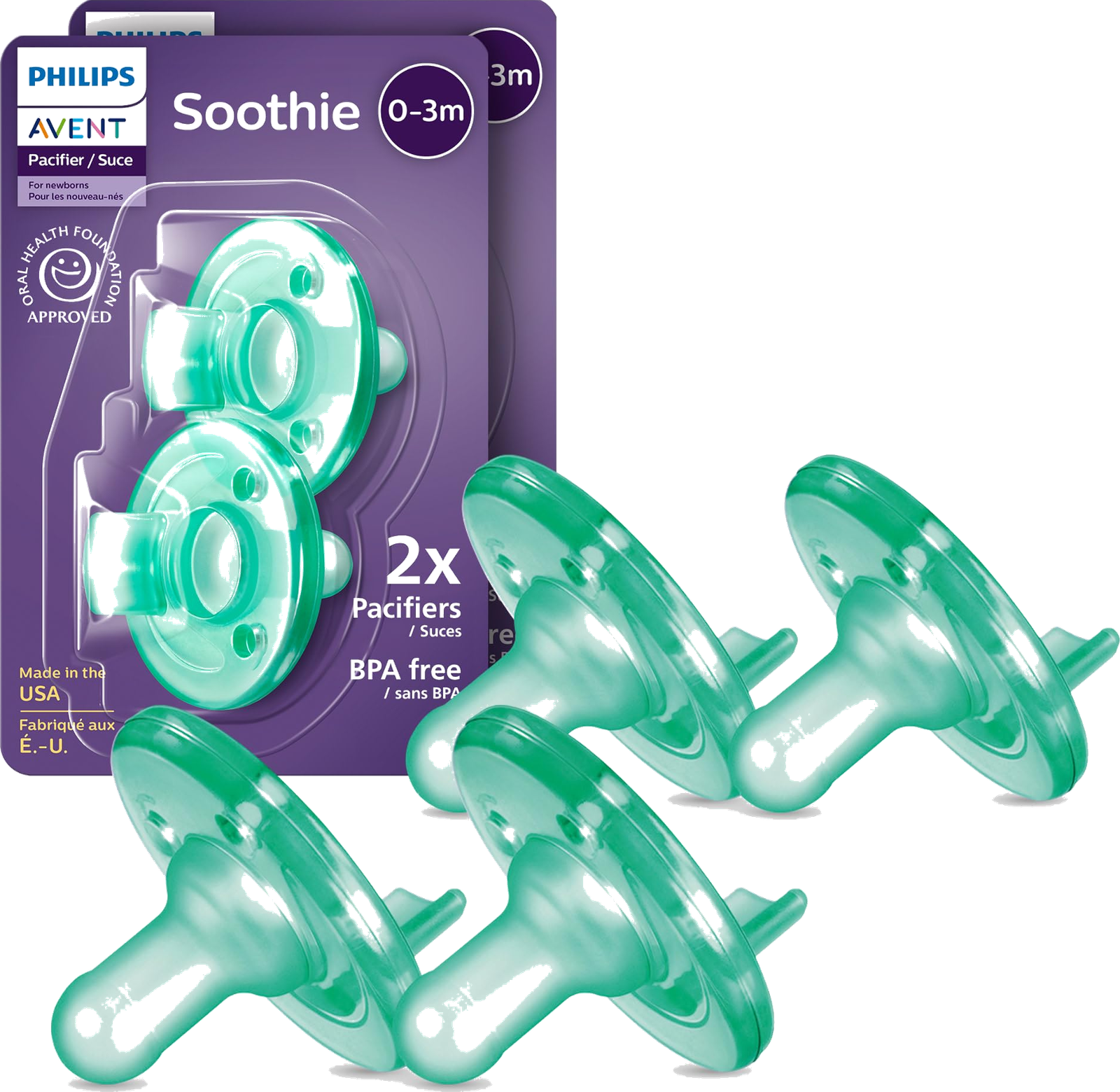
What 62,942 parents said: 4.5 ★ on Amazon.ca. 77% leave 5 stars, 88% leave 4 or 5 — by far the largest sample here.
Why it tops the list. Most fussing is not a fever and not gas — it is a newborn who needs to suck, and the Soothie is the pacifier a newborn is most likely to actually accept. Reviewers say the one-piece medical-grade silicone "feels exactly like breast nipples," which is why babies who reject every other soother take this one; it is also the green bulb many North-American maternity wards tuck into the bassinet on day one, so for a lot of families it has already been proven on their own baby. Because it is moulded from a single piece with no seams or joints, water cannot get trapped: buyers call it "so smooth and very easy to clean," and it goes straight into a sterilizer or boiling water. It arrives as a 4-pack for about $11, which is why parents describe consistently reordering it.
Standout points parents cite repeatedly:
- Breastfed newborns accept it when they reject other pacifiers — the shape is the reason
- No seams to trap water; sterilizer- and boil-safe, clean in seconds
- The hospital-issued default, sold as a 4-pack for roughly $11
The honest weakness: fit is where the critical reviews cluster. The round one-piece shield is "a bit on the larger side" and does not sit snugly in every small newborn mouth; because the nipple is firm and there is no clip, some parents report their newborn simply "can’t keep them in." A baby who prefers a soft, flexible nipple may reject it outright. And the silicone should be replaced every four weeks for hygiene, which is an ongoing cost even at this price.
Pick this if: you are breastfeeding, your baby is 0–3 months, and you want the pacifier with the best odds of being accepted on the first try.
🌡️ Best for ruling out a fever: Safety 1st 3-in-1 Nursery Thermometer
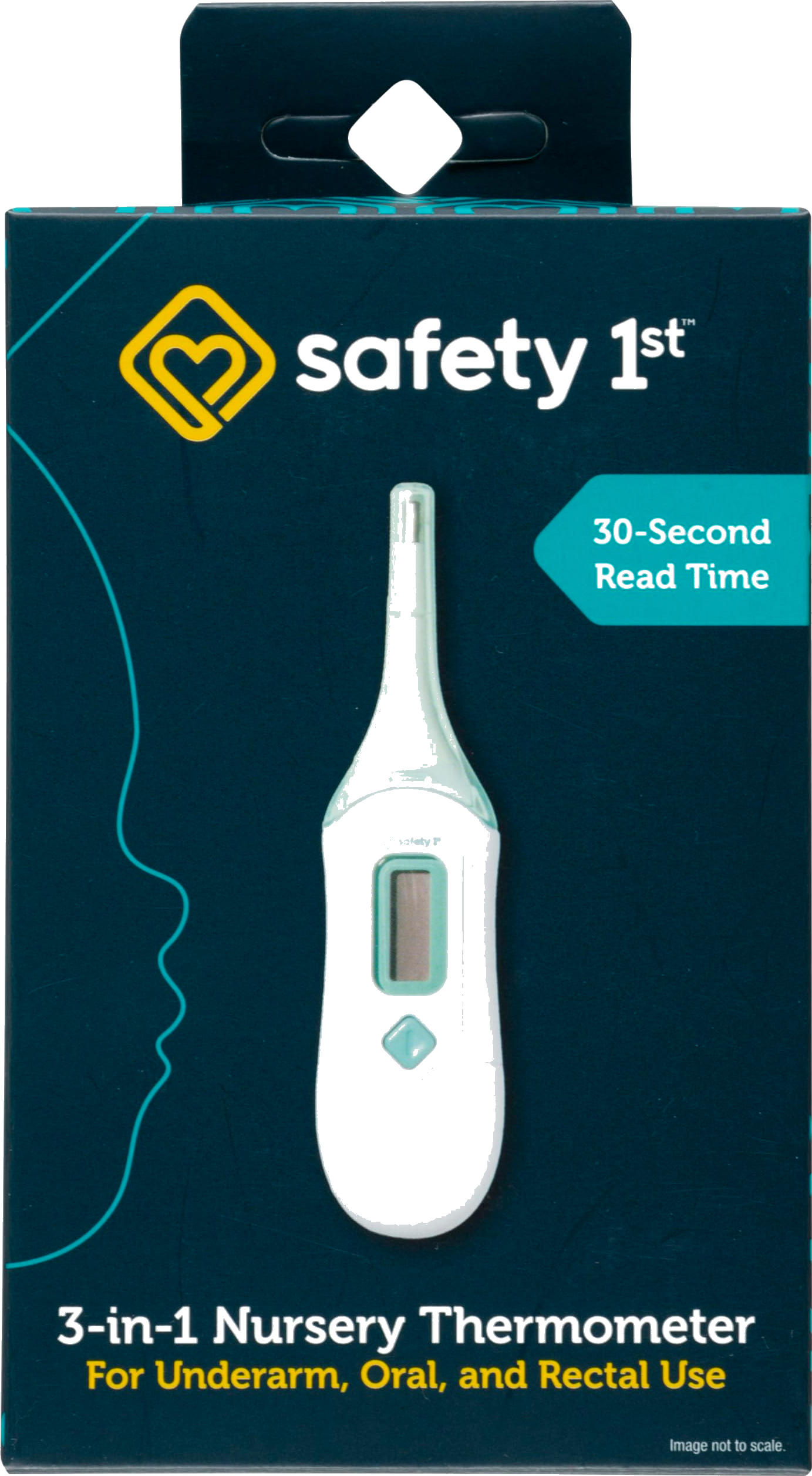
What 6,660 parents said: 4.5 ★ on Amazon.ca. 75% leave 5 stars, 87% leave 4 or 5.
Why it earns the spot. Before you soothe a crying baby you want to know you are not soothing a fever, and this is the cheapest credible way to find out. It is a plain digital contact thermometer with a flexible waterproof tip that takes oral, rectal, or underarm readings, so a single roughly $11 device covers the newborn, an older sibling and the adults. An over-insertion gauge limits how far the tip travels for rectal use and a fever-alarm beep tells you the reading is done. The recurring five-star theme is dependable value: buyers describe testing it back to back and getting "exactly the same" reading three times running, and say it is "super useful to have a couple of these around the house." It ships with a printed temperature guide many parents cut out and tape near the changing table.
Standout points parents cite repeatedly:
- Oral, rectal and underarm in one device — covers the whole family
- Repeatable readings and a clear display for middle-of-the-night checks
- Flexible tip and over-insertion gauge make it feel safe on a newborn, at about $11
The honest weakness: it reads slowly. Even happy reviewers flag that you hold it in place noticeably longer than a one-second infrared scanner, which is harder with a squirming baby. More seriously, 6% of reviewers leave a single star and the sharpest of them report readings they did not trust — one says outright they would not rely on it for newborn monitoring. That is a minority view against 87% at four or five stars, but on a health device it is the complaint that deserves the most weight.
Pick this if: you want one inexpensive thermometer that covers every method and every family member, and you are willing to trade a few seconds for the price.
💨 Best for trapped gas: Frida Baby Windi Gas Passer
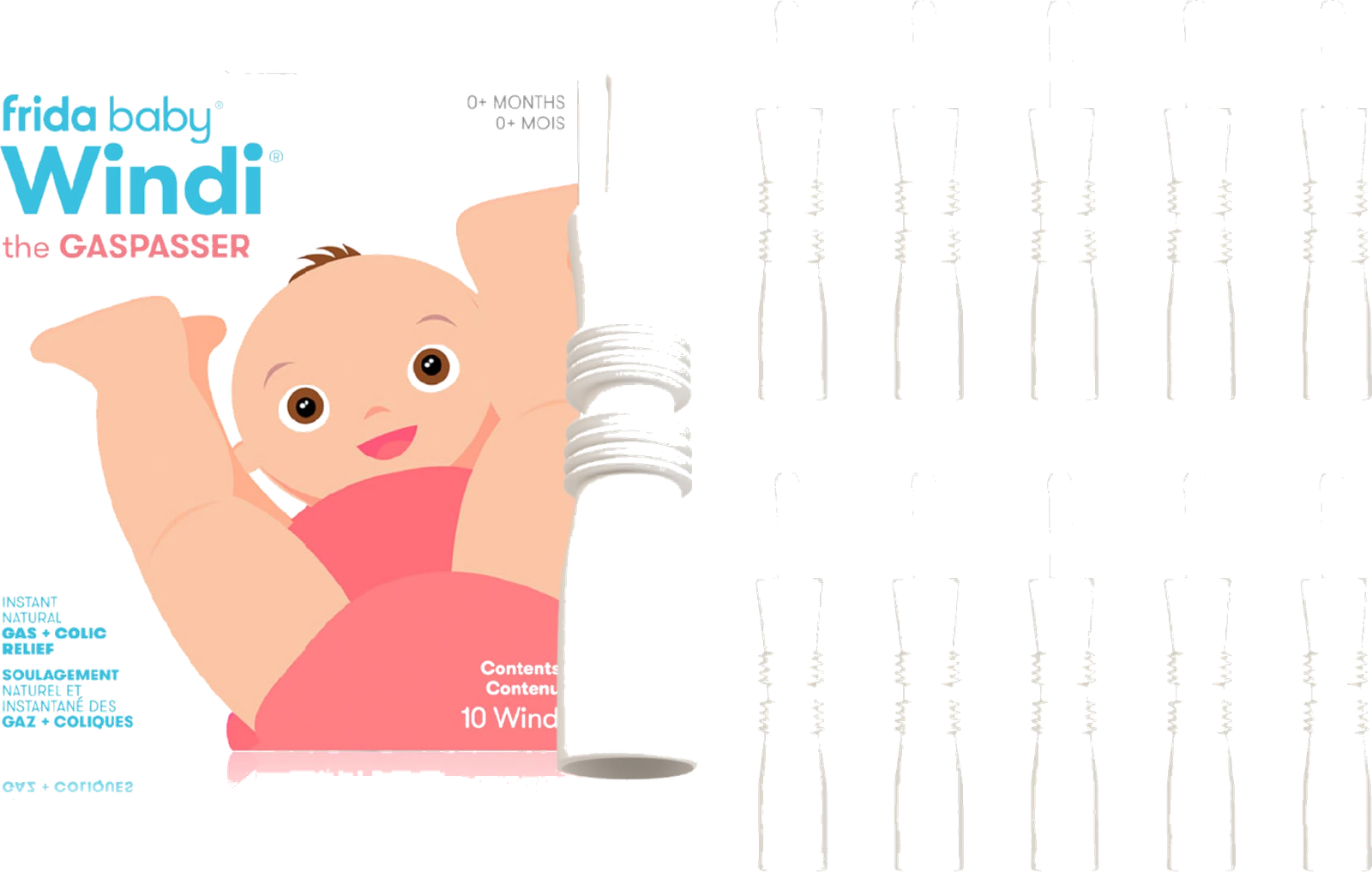
What 3,327 parents said: 4.2 ★ on Amazon.ca. 71% leave 5 stars — the most divisive product here, and the smallest sample.
Why it earns the spot. Some cries are trapped gas, and when they are, nothing on this list comes close. The Windi is a small flexible single-use tube with a rounded, vented tip: you lubricate it, insert it a short way while holding baby’s legs up, and it holds the passage open so gas — and sometimes stool — can escape, with a small whistle confirming it is working. It contains no medication. The five-star reviews are emphatic in a way the star average does not capture: parents describe babies who had not passed stool in five to seven days finding relief within minutes, and reach repeatedly for the word lifesaver for 2am gas crying that massage and bicycle legs did not touch. Several also credit it during the transition to solids, when stool firms up and babies struggle.
Standout points parents cite repeatedly:
- Fast relief when massage and bicycle legs have already failed
- Drug-free, clearly instructed, and the whistle tells you it is working
- Helps with newborn constipation and the rough first weeks of solids
The honest weakness: this is the one pick that genuinely does not work for everyone. 10% of reviewers leave a single star, most because they followed every step, got no whistle and no result, and call it a waste of money. Separately, at least one reviewer’s pediatrician warned that leaning on it too often can interfere with a baby learning to pass gas on their own, so a number of parents treat it strictly as an occasional rescue rather than a routine tool. The passers are single-use at 10 per box, so there is an ongoing cost, and plenty of buyers admit the idea felt strange the first time.
Pick this if: your baby has real gas or constipation distress and you want a fast, drug-free option in the drawer — understanding it is a rescue tool, not a nightly habit.
How to choose: what to actually weigh
Three questions, in the order they should shape what you buy.
1. Which cry are you dealing with?
This is the fork that decides everything. A baby who is hot, listless or off their feed is a thermometer question first — rule a fever in or out before anything else, and call your doctor if there is one. A baby who is drawing their legs up, straining and hard-crying after a feed reads as trapped gas, which is the Windi’s job. A baby who is simply unsettled and rooting usually just needs to suck, and that is the Soothie. Most households end up owning all three, but that is the order the need arrives in.
2. Everyday item or emergency-drawer item?
The Soothie is genuinely daily — it lives in the bassinet, the diaper bag and the car, which is why it sells as a 4-pack. The thermometer is a keep-forever tool you will use a handful of times a year for the next decade, and reviewers routinely buy two so one stays in the diaper bag. The Windi is different: single-use, 10 per box, and by the reviews’ own account best kept for the bad nights rather than reached for reflexively. Budget for the first two as permanent kit and the third as a consumable.
3. What are you actually comfortable doing at 2am?
Be honest with yourself here, because the reviews are. Rectal insertion — for the thermometer’s most accurate reading or for the Windi — is a dealbreaker for some parents, and there is no point owning a tool you will not use. The thermometer at least offers oral and underarm alternatives; the Windi does not. On the other side, the Soothie asks nothing of you but has the highest chance of the baby refusing it, since the round bulb runs large. None of these are safety trade-offs — they are comfort trade-offs worth knowing before you buy.
| Product | Price (Amazon.ca) | What’s in the box | The job it does |
|---|---|---|---|
| Philips Avent Soothie Pacifier | $10.76 | 4-pack, size 0–3 months | Settles a fussy newborn who needs to suck |
| Safety 1st 3-in-1 Nursery Thermometer | $10.97 | 1 thermometer + temperature guide | Rules a fever in or out, three ways |
| Frida Baby Windi Gas Passer | $16.94 | 10 single-use passers | Releases trapped gas and eases constipation |
Honest weaknesses we won’t hide
Our aggregation rule: if a complaint shows up in helpful-vote-weighted critical reviews, it goes in the write-up. Here are the load-bearing weaknesses of each pick.
| Product | What you should know going in |
|---|---|
| Philips Avent Soothie | The round bulb runs large for some small newborn mouths; the firm nipple and lack of a clip mean some babies cannot keep it in; silicone should be replaced every four weeks. |
| Safety 1st 3-in-1 Thermometer | Reads noticeably slower than an infrared scanner; 6% one-star reviews, the sharpest reporting readings they did not trust — a minority view, but on a health device the one that matters most. |
| Frida Baby Windi | 10% one-star reviews, mostly buyers reporting it did nothing at all for their baby; at least one reviewer’s pediatrician advised sparing use; single-use and awkward the first time. |
FAQ
What should I check first when a newborn won’t stop crying?
Rule out a fever before you try to soothe. A thermometer reading takes under a minute and tells you whether this is a comfort problem or a call to your doctor. Once a fever is ruled out, the reviews point to two common culprits: trapped gas, which usually shows as legs drawn up and hard crying after a feed, and plain unsettledness, where a baby roots and calms as soon as they have something to suck. This is buyer consensus, not medical advice — if a newborn is inconsolable or feverish, contact your healthcare provider.
Is the Philips Avent Soothie good for breastfed babies?
It is the pacifier breastfeeding parents in these reviews reach for most. The one-piece silicone nipple is repeatedly described as feeling "exactly like breast nipples," and the recurring story is a baby who rejected every other soother accepting this one. It is also the pacifier many North-American hospitals hand out at birth, so a lot of newborns have already taken it before they come home. The caveat is fit: the round bulb is larger than some small mouths like.
Does the Frida Baby Windi actually work?
For most buyers, yes — and dramatically. 71% leave five stars and describe relief within minutes for babies who had been constipated for days or crying with gas all night. But 10% leave one star, almost all reporting it did nothing for their baby despite following every step. That split is unusually wide, and it is the honest answer: it is a high-payoff tool that is not a guaranteed fix. Buy it as something to have on hand, not as a solution you are counting on.
Is a cheap digital thermometer accurate enough for a newborn?
The consensus across 6,660 reviews is yes: 87% leave four or five stars, and the most common praise is repeatability — parents describe getting identical readings three times in a row. The dissent is real though. 6% leave one star and the sharpest report readings they did not trust for newborn monitoring. If a reading ever seems inconsistent with how your baby looks and feels, take a second reading and trust your judgement over the number.
How often can you use a gas passer?
Sparingly, according to the reviews themselves. At least one buyer relayed their pediatrician’s warning that relying on it too often can interfere with a baby developing their own sphincter-control instincts, and several parents describe deliberately reserving it for the worst nights. The 10-per-box format nudges you the same way. Ask your own pediatrician how often is appropriate for your baby rather than treating it as a nightly routine.
The bottom line
We summarised 72,000+ verified parent reviews, and the three picks sort cleanly by which cry you are answering:
- Buy first: the Philips Avent Soothie Pacifier — the highest-rated and most-reviewed pick here, and the one a breastfed newborn is most likely to accept.
- Keep in the drawer: the Safety 1st 3-in-1 Nursery Thermometer — about $11 to rule a fever in or out before you try anything else.
- For the bad gas nights: the Frida Baby Windi Gas Passer — dramatic relief when it works, and honestly divisive when it does not.
Building out the rest of the kit? The baby grooming kit roundup handles nails, noses and ears.
Nothing here is medical advice — every verdict is summarised from verified Amazon.ca buyer reviews, not from testing. Talk to your healthcare provider about a feverish or inconsolable baby. Prices shown are the last recorded Amazon.ca prices (July 2026) and can change — check the live listing before buying. We earn a small commission if you buy through the Amazon links above — it doesn’t change the price you pay and never changes which products we recommend. Full disclosure: /affiliate-disclosure/.