
Philips Avent Natural Response vs Tommee Tippee Closer to Nature (2026): Which Baby Bottle Wins?
Two bottles, one job: getting a breastfed baby to take a bottle without a fight. The Philips Avent Natural Response and the Tommee Tippee Closer to Nature are the two most-reviewed transition bottles on Amazon Canada, and they attack that problem from opposite ends — one controls the flow, the other reshapes the nipple. We read 41,766 verified parent reviews across both to work out which one belongs in your steriliser.
The short version, if you only want one sentence: If your baby is refusing bottles, start with the Tommee Tippee Closer to Nature — it is the bottle buyers repeatedly say their baby finally accepted, and it costs roughly 40% less. If your baby gulps or chokes on a fast flow, or you want the fewest parts to wash at 2am, the Philips Avent Natural Response is the better bottle and our narrow winner on the numbers.
Quick verdict at a glance
| Philips Avent Natural Response | Tommee Tippee Closer to Nature | |
|---|---|---|
| Price (Amazon.ca, Aug 2026) | $26.97 CAD | $15.96 CAD |
| Parent verdict | 9.0 / 10 | 8.9 / 10 |
| Amazon.ca rating | 4.7 ★ · 16,573 | 4.6 ★ · 25,193 |
| Five-star share | 86% | 80% |
| Nipple design | Flow only on active sucking | Wide, soft, breast-shaped |
| Anti-colic | Twin valve, built into the nipple | Separate sensitive valve |
| Parts to wash | 2 | 3 |
| Strongest at | Flow control for gulpers | Bottle acceptance |
| Watch out for | Buying the right flow level | Valve seating (collapse, leaks) |
Who each bottle is actually for
🏆 Philips Avent Natural Response — for gulpers, and for the fewest parts
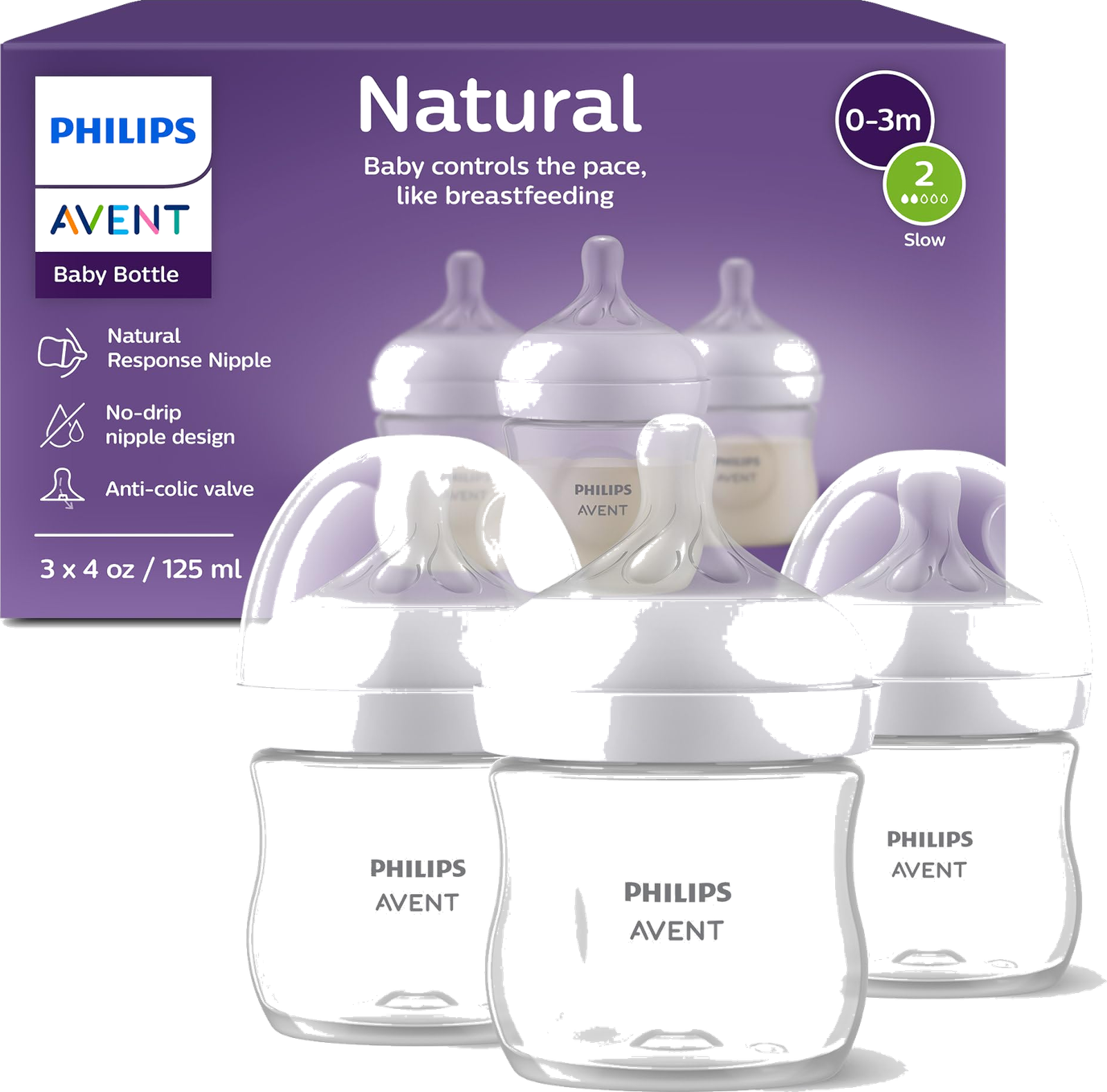
The Avent is the higher-scoring bottle here — 4.7 ★ across 16,573 Amazon.ca reviews, 86% of them five-star. Its whole design argument sits in the nipple: milk is released only while the baby is actively sucking, so the bottle pauses when they pause. Reviewers who came from faster bottles describe that as the fix for choking, gulping and the mid-feed meltdown. The second thing buyers keep raising is cleaning: there are only two parts, with the anti-colic valve built into the nipple rather than sitting loose as a separate insert.
Pick this if: your baby gulps, chokes or fusses on a fast flow; you are combo-feeding and want the bottle to behave like a pause-and-go breastfeed; or you are the parent doing the washing up and want the shortest possible parts list. The catch, covered below, is that you have to buy the flow level that matches your baby’s stage — this is not a bottle that quietly grows with them.
🍼 Tommee Tippee Closer to Nature — for the baby who refuses bottles
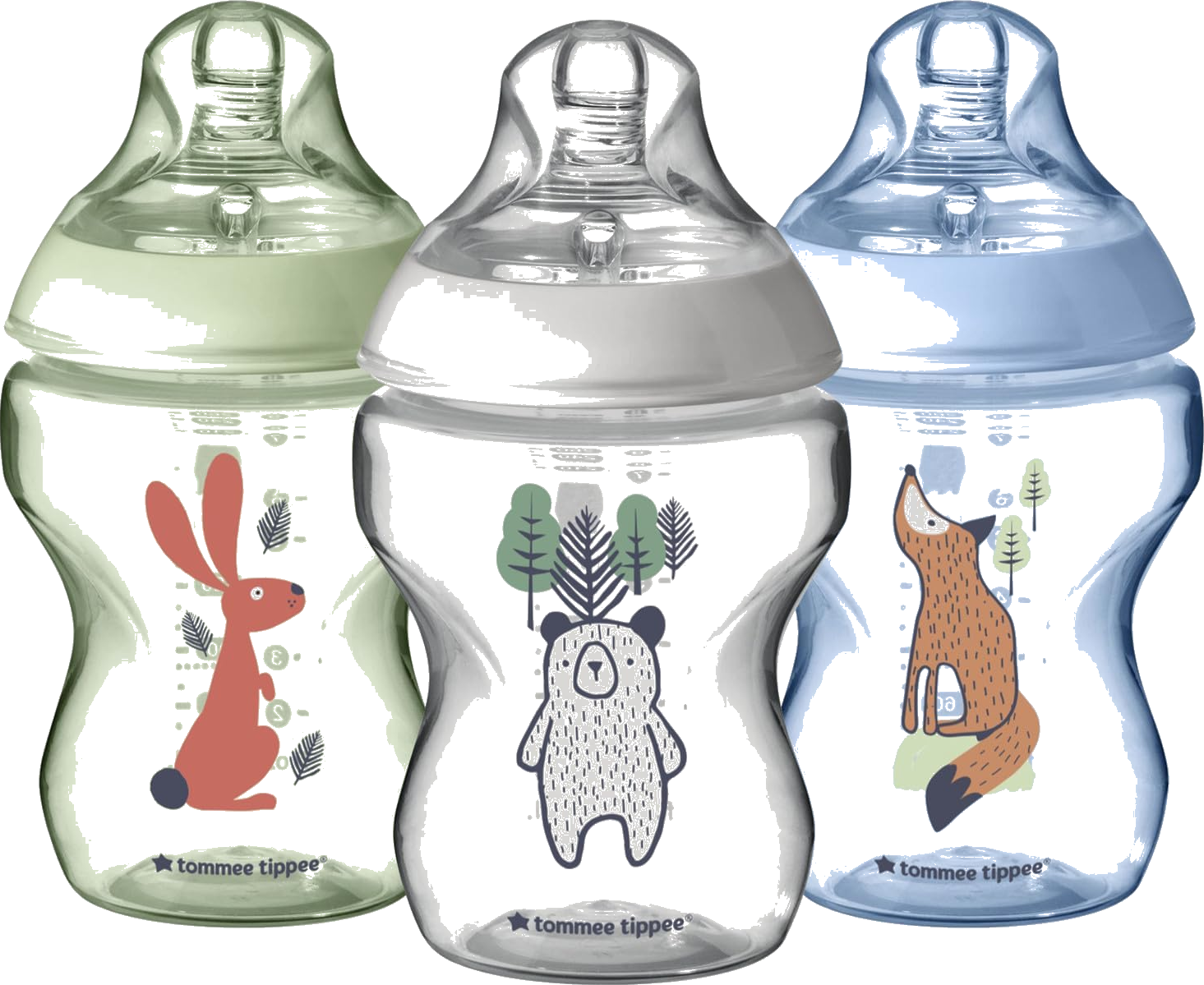
The Tommee Tippee carries the bigger review pile — 25,193 reviews at 4.6 ★, 80% five-star — and one theme dominates it: acceptance. Parents describe trying several brands and this being the one their baby would actually take, which reviewers put down to the wide, soft, breast-shaped nipple that flexes rather than holding a rigid shape. Durability is the other recurring note; owners report sets still looking new after a year of daily use. It is also the cheaper bottle by a clear margin.
Pick this if: bottle refusal is the problem you are actually trying to solve, you are introducing a bottle to an exclusively breastfed baby, or you are buying a first set and the price difference matters. Its trade-off is one extra part: the sensitive anti-colic valve is separate, and it is the source of nearly every complaint below.
⚠️ Both bottles share one cost nobody budgets for: nipples are consumables. Buyers of both brands note they should be replaced every few months, and bottles swapped once they discolour. Whichever you choose, the sticker price is not the running cost.
Head-to-head on the four things parents actually care about
1. Will your baby take it?
Tommee Tippee wins, and it is not close. Acceptance is the single most repeated positive across its 25,193 reviews: parents who had already bought and abandoned other brands say this was the nipple their baby latched to. One buyer summarised it as the only bottle brand her son would drink from, crediting the wider nipple for the latch. The Avent has plenty of happy combo-feeding reviewers too, but its reviews are organised around how the milk flows, not around rescuing a refusal.
If you have not hit refusal yet, this round does not decide anything for you. If you have, it decides everything.
2. Flow control, gulping and colic
Philips Avent wins. The Natural Response nipple holds milk until the baby actively draws it, which reviewers repeatedly connect to less choking and a calmer feed. Buyers also credit the twin anti-colic valve with less gas and fussiness than bottles they had used before. Tommee Tippee’s sensitive valve vents air during the feed and its owners report the same benefit — but it depends on the valve being seated correctly, and the Avent’s equivalent is integrated into the nipple where it cannot be misassembled.
The Avent’s own caveat lands here: reviewers note the flow level has to match the baby’s age. Too slow frustrates an older baby, too fast overwhelms a newborn, and getting it wrong reads as a bottle problem when it is a nipple-choice problem.
3. Cleaning, and what leaks
Philips Avent wins. Two parts against three sounds trivial until you are sterilising six bottles a day. Avent buyers specifically contrast it with fiddlier systems — easy to take apart, wash and reassemble, and reviewers say it does not leak. Tommee Tippee’s extra valve is both an extra thing to wash and an extra thing to get wrong: its critical reviewers report the nipple collapsing mid-feed when the valve is not seated exactly right, and occasional leaking around the collar if the bottle is screwed together in a hurry.
Both are BPA-free and dishwasher-safe, so the difference is parts count and assembly care, not materials.
4. Price, and what the critical minority says
Tommee Tippee wins on price — roughly $11 CAD less per set at the prices we recorded in August 2026, which compounds if you are buying several. On the ratings, the Avent is marginally ahead (4.7 against 4.6; 86% five-star against 80%).
Look at the unhappy end and the gap stays small: about 5% of Avent buyers left one or two stars, against about 6% for Tommee Tippee. The difference is what those reviews say. Tommee Tippee’s critics name a concrete, fixable mechanism — valve seating causing collapse and leaks. On the Avent, the documented critical theme is flow level, and beyond that Amazon’s full review feed was not available to us at the time of writing, so we are not going to characterise the rest of its critical 5% as though we had read it.
Verdict by use case
These two bottles are close enough on the numbers that the right answer is decided by your situation, not by the scores.
When your baby won’t take a bottle at all
Tommee Tippee Closer to Nature. Acceptance is the dominant theme across 25,193 reviews, and at $15.96 CAD it is the cheaper thing to try first. If it fails, you have lost very little.
When your baby gulps, chokes or comes off the bottle screaming
Philips Avent Natural Response. The nipple that only gives milk on active sucking is the specific feature buyers credit for fixing this. Match the flow level to your baby’s stage or you will reproduce the problem you bought it to solve.
When you’re combo-feeding and want the bottle to feel like breastfeeding
Either, and they are aiming at different halves of it. Tommee Tippee mimics the breast’s shape; Avent mimics its rhythm. If your baby’s objection is how it feels in the mouth, go Tommee Tippee. If the objection is how fast it arrives, go Avent.
When you’re the one doing the washing up
Philips Avent. Two parts, no loose valve to lose, no seating step to get wrong at 2am.
When you’re buying a full starter set on a budget
Tommee Tippee. Across four or six bottles the price gap is real money, and 80% five-star across 25,193 reviews is not a compromise you are apologising for.
The honest weaknesses we won’t hide
We have an aggregation rule: if a complaint shows up in helpful-vote-weighted critical reviews, it goes in the writeup. Buyers trust sites that show the downsides.
| Bottle | What you should know going in |
|---|---|
| Philips Avent Natural Response | Flow level must be matched to your baby’s age, and buying wrong looks like a bottle fault. Nipples need periodic replacement. It is the pricier of the two. Beyond the flow caveat, Amazon’s full review feed was unavailable at the time of writing, so its remaining critical themes are not yet confirmed — we would rather say that than guess. |
| Tommee Tippee Closer to Nature | The separate anti-colic valve is a third part to wash and track. Seated incorrectly, the nipple can collapse mid-feed. Some buyers report leaking around the collar when the bottle is not screwed together carefully. Slightly lower rating and five-star share than the Avent. |
Read the full reviews
- Full Philips Avent Natural Response review — 16,573 parents, 4.7 ★, the flow-control story in depth
- Full Tommee Tippee Closer to Nature review — 25,193 parents, 4.6 ★, the bottle-refusal story in depth
- Best baby bottles in Canada — where both of these land against Dr Brown’s
Buy on Amazon Canada
Prices shown were recorded on Amazon.ca in August 2026 and move often — check the current price before buying. As an Amazon Associate we earn from qualifying purchases, at no extra cost to you; full affiliate disclosure here. Scores are summarised from verified buyer reviews, not from hands-on testing. No sponsorships, ever.
Frequently asked questions
Which bottle is better for a breastfed baby who refuses the bottle?
The Tommee Tippee Closer to Nature. Acceptance is the single most repeated theme across its 25,193 reviews, with parents describing it as the bottle their baby took after refusing others. Buyers credit the wide, soft, breast-shaped nipple that flexes rather than holding a rigid shape.
Which one is easier to clean?
The Philips Avent, by one part. Its anti-colic valve is built into the nipple, so there are two pieces to wash and nothing to seat correctly. The Tommee Tippee’s sensitive valve is separate — a third piece to clean and keep track of. Both are dishwasher-safe.
Why does the Tommee Tippee nipple collapse mid-feed?
Critical reviewers consistently trace it to the anti-colic valve not being seated correctly during assembly. When it is misaligned the nipple can flatten during a feed and has to be reset. The same assembly step is behind the occasional reports of leaking around the collar.
Do you have to buy different nipples as your baby grows?
With the Avent, yes — and reviewers are clear that getting the flow level wrong is the main source of disappointment, since too slow frustrates an older baby and too fast overwhelms a newborn. Both brands sell faster-flow nipples separately, and buyers of both note that nipples are consumables to be replaced every few months.
Which is better value?
It depends which problem you are buying to solve. The Tommee Tippee costs roughly $11 CAD less per set at the prices recorded in August 2026. The Avent rates marginally higher (4.7 against 4.6, and 86% five-star against 80%) and carries a 9.0 parent verdict against 8.9. That gap is small enough that the cheaper bottle is the sensible first try unless your baby specifically struggles with flow.