Hatch Rest vs Baby Shusher (2026): Which Sound Machine Actually Settles Your Baby?
Two devices, one 3am problem: a baby who will not settle. The Hatch Rest and the Baby Shusher both promise that sound will do the work your arms have been doing — but they are not really chasing the same job. One is a nursery fixture built to run every night for years; the other is a pocket-sized soother built for the first few months. We read 53,194 verified parent reviews across both to work out which one belongs beside your crib.
The short version, if you only want one sentence: If you are buying one sleep device, buy the Hatch Rest — it rates far higher with buyers (4.6 ★ against 4.1 ★), it runs all night, and parents report still using it years later. Buy the Baby Shusher only if your actual problem is an inconsolable newborn who settles to rhythmic shushing and you want your own voice back — and go in knowing 11% of its reviewers left one star.
Quick verdict at a glance
| Hatch Rest | Baby Shusher | |
|---|---|---|
| Price (Amazon.ca, 2026) | $109.99 CAD | $77.87 CAD |
| Parent verdict | 8.8 / 10 | 7.0 / 10 |
| Amazon.ca rating | 4.6 ★ · 33,384 | 4.1 ★ · 19,810 |
| Five-star share | 82% | 62% |
| One- or two-star share | 5% | 16% |
| What it actually does | Sound machine + night light + ok-to-wake alarm | One rhythmic human “shhh” |
| Runs all night | Yes | No — 15 or 30-minute timer |
| Controls | Phone app over Bluetooth | Volume dial on the unit |
| Portable | Nursery fixture | Yes — ~140 g, clips to a stroller |
| Useful until | Toddler and beyond, per buyers | The newborn window |
| Watch out for | Bluetooth lag; one poor “fan” sound | Reliability — units failing early |
Who each device is actually for
🏆 Hatch Rest — the one device that replaces three
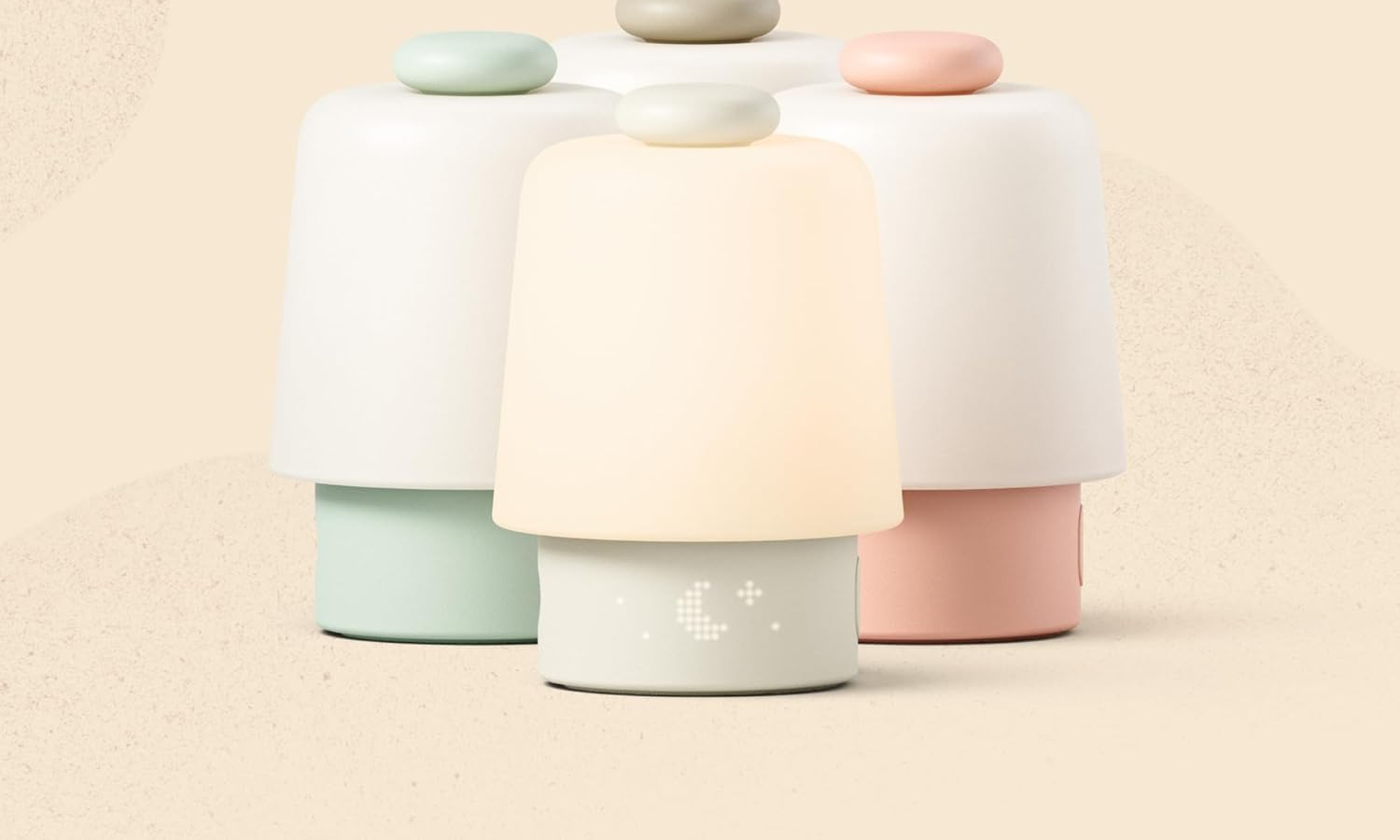
The Hatch Rest carries the larger review pile and the better numbers: 4.6 ★ across 33,384 Amazon.ca reviews, 82% of them five-star, and 92% at four stars or above. The dominant positive theme is consolidation. Buyers describe it replacing a white-noise machine, a night light and a toddler alarm clock with one object on the shelf — one reviewer noted it removed the need for a separate wake-up clock later on. Parents control it from a phone over Bluetooth, which several say they did not expect to value until they could change the sound from the hallway instead of opening the nursery door.
Pick this if: you are setting up a nursery from scratch, you want sound running all night rather than for twenty minutes, or you are buying something that has to earn its price over years rather than months. Buyers repeatedly describe using it from newborn through the toddler years, and the “ok-to-wake” colour change is the feature sleep-training parents single out as the one that worked.
👶 Baby Shusher — for the newborn who will not stop crying
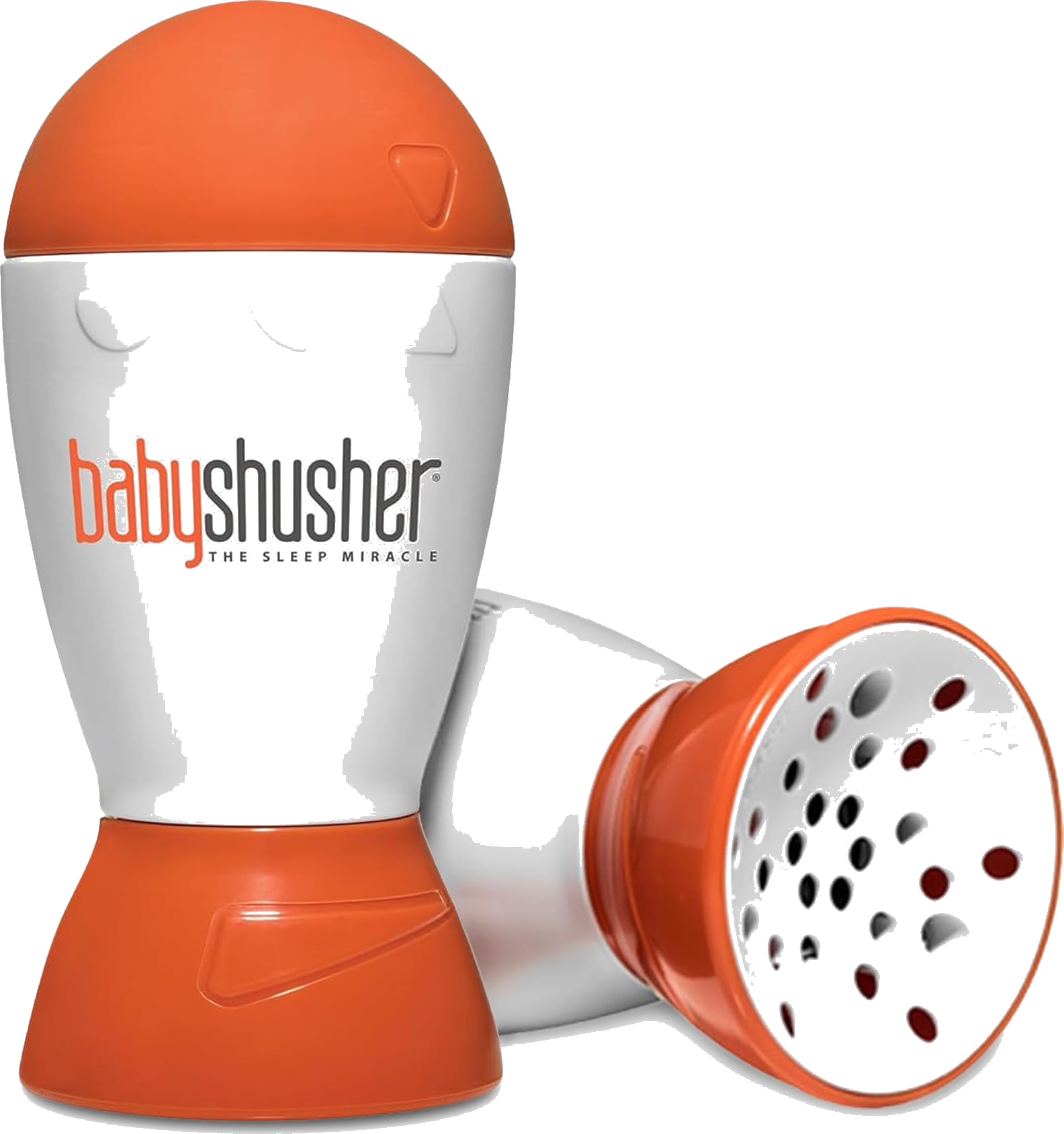
The Baby Shusher does one thing: it plays a recorded human “shhh” on a rhythm, with a volume dial you are meant to match to the baby’s crying. It is not a white-noise machine, and its 4.1 ★ across 19,810 reviews is a genuinely split verdict — 75% at four or five stars, 16% at one or two. But the happy reviews are unusually specific: parents describe a fussy or colicky baby settling within minutes, in the car, in the stroller, in the middle of the night. Several say the real gift is getting their own voice back, having spent weeks shushing by mouth twenty minutes at a stretch.
Pick this if: you already shush by hand every night, you are following the calming method from The Happiest Baby on the Block, or you need something that clips to a bag and works away from home. At roughly 140 g on two AAA batteries, it goes places the Hatch cannot. Its trade-offs — the timer, the price per feature, and the failure rate — are covered below, and they are real.
⚠️ The price gap is smaller than it looks. At the prices recorded on Amazon.ca these two sit about $32 CAD apart — not the gulf you might expect between a single-sound soother and a full nursery device. If budget is the reason you are leaning toward the Shusher, it is worth checking that maths before you decide.
Head-to-head on the four things parents actually care about
1. Calming a baby who is already screaming
Baby Shusher wins. This is the one round it takes outright, and it is the reason the product exists. Its dominant positive theme by a wide margin is active soothing — parents report a colicky baby settling within minutes, and Amazon’s own review summary tags performance as one of its strongest themes. The rhythmic shush is doing something a looping white-noise track is not: it mimics what a parent does with their own mouth, at a volume you raise to meet the crying and then bring down.
The Hatch Rest is a sleep environment rather than a rescue tool. Its reviews are organised around routine, light and schedules — not around stopping a meltdown in progress. If your nights are currently a screaming baby and two exhausted adults taking shifts, that distinction matters more than any rating.
2. Getting through the whole night
Hatch Rest wins, decisively. The Shusher stops after 15 or 30 minutes by design, and that design choice is the single most practical complaint in its reviews. One three-star buyer with a colicky baby described it timing out around the twenty-minute mark and the baby waking — which leaves you restarting the device, the exact job you bought it to take off your hands.
The Hatch runs continuously, and its custom programs let buyers step the light and sound through the night: brighter and louder at bedtime, dimming to soft light and quiet sound overnight, then a colour change in the morning. Parents sleep-training toddlers name that last part as the feature that earned the price. Its own caveat lands here too, though — several four-star reviewers single out the “fan” white-noise setting as poor, while rating the other sounds fine.
3. Reliability, and what breaks
Hatch Rest wins. This is the sharpest gap between the two, and it is visible straight in the star distribution: 16% of Shusher reviewers left one or two stars, against about 5% for the Hatch. Amazon flags reliability as a mixed theme on the Shusher, and its critical reviews name the mechanism — one buyer’s unit started glitching and playing strange sounds on a loop inside two months, another lasted about six, and a returning parent found theirs skipping by its third year. Several also mention the unit sliding off whatever surface they set it on.
The Hatch’s recurring complaints are friction rather than failure: a few seconds of Bluetooth lag every time you change a setting from the app, and a maximum brightness that reviewers say is mood-light rather than task-light — not enough to read by during a night feed. One honest caveat on our side: the Hatch’s 3% one-star pool (about 1,002 reviews) could not be themed, because Amazon’s full review feed was unavailable at the time of writing. We would rather flag that than characterise reviews nobody here has read.
4. Price, and what you get for it
Hatch Rest wins on value; Baby Shusher wins on sticker price. The Shusher is about $32 CAD cheaper, and for that you get one sound and a timer. The Hatch is the more expensive object but the cheaper set of functions — buyers frame $109.99 as replacing three or four single-purpose devices they would otherwise have bought separately.
Shusher owners see this themselves. Value for money is the most-mentioned mixed theme in its reviews, and even happy buyers raise it — one five-star review is titled, in effect, works great for us but expensive. Multi-sound machines sell for a fraction of either price, and if all you want is continuous noise, both of these are the wrong purchase.
Verdict by use case
The scores favour the Hatch by a clear margin, but these two solve different problems, so the honest answer depends on which problem you have tonight.
When you have a colicky newborn and nothing is working
Baby Shusher. Fast settling of a crying newborn is its dominant review theme and the Hatch simply does not claim it. Accept that you are buying a tool for a window of a few months, not a device for the nursery.
When you are setting up the nursery before the baby arrives
Hatch Rest. 82% five-star across 33,384 reviews, it runs all night, and the light and alarm functions are still doing work when your baby is a toddler. It is the registry buy of the two.
When you need it to work in the car and the shops
Baby Shusher. Around 140 g on two AAA batteries, it clips to a bag or stroller. Buyers specifically describe using it out of the house, which is not something the Hatch is built for.
When you are sleep-training a toddler
Hatch Rest, and it is not close. The ok-to-wake colour change is the most consistently praised feature in its reviews for exactly this job. The Shusher has nothing equivalent, and shushing stops working long before the toddler years.
When you want the cheapest thing that makes noise
Neither. Buyers of both products point this out themselves: basic white-noise machines sell for a fraction of either price. Pay for the Hatch if you want the light and alarm functions, or for the Shusher if you want the rhythmic shush specifically. Paying either price for plain background noise is the one clear mistake here.
When you are wondering whether you need both
Most families will not. They overlap far less than the category suggests, so owning both is defensible for a genuinely colicky newborn — the Shusher for the screaming, the Hatch for the night. But that is over $180 CAD on sleep sound before anything else, and the Hatch alone is the safer single bet for the large majority of buyers.
The honest weaknesses we won’t hide
We have an aggregation rule: if a complaint shows up in helpful-vote-weighted critical reviews, it goes in the writeup. Buyers trust sites that show the downsides.
| Device | What you should know going in |
|---|---|
| Hatch Rest | Several seconds of Bluetooth lag every time you change a setting from the app — minor once, tiring daily. The “fan” white-noise sound is singled out as poor by four-star buyers, though the other sounds are fine. Maximum brightness is mood-light, not enough to read by. It depends on a smartphone app. Its 3% one-star pool could not be themed because Amazon’s full review feed was unavailable at the time of writing, so treat those as unassessed rather than clean. |
| Baby Shusher | Reliability is the real complaint — 11% of all ratings are one star, with buyers reporting units glitching or dying inside two to six months. The timer switches off at 15 or 30 minutes, which several parents found woke the baby it had just settled. Expensive for a single sound, and buyers say so in their own reviews. Some report it sliding off surfaces. The shushing window closes within the first few months. |
Read the full reviews
- Full Hatch Rest review — 33,384 parents, 4.6 ★, the multi-function story in depth
- Full Baby Shusher review — 19,810 parents, 4.1 ★, the split verdict in depth
- Best baby sleep products in Canada — where the Hatch lands against swaddles and sleep sacks
Buy on Amazon Canada
Prices shown were recorded on Amazon.ca during 2026 — the Hatch Rest in June, the Baby Shusher in August — and they move often, so check the current price before buying. As an Amazon Associate we earn from qualifying purchases, at no extra cost to you; full affiliate disclosure here. Scores are summarised from verified buyer reviews, not from hands-on testing. No sponsorships, ever.
Frequently asked questions
Which is better for a colicky newborn who will not settle?
The Baby Shusher. Fast settling of a crying newborn is the dominant theme across its 19,810 reviews, with parents describing a fussy baby calming within minutes. The Hatch Rest is built to create a sleep environment rather than to interrupt a meltdown in progress, and its reviews reflect that.
Can the Baby Shusher run all night?
No. It shuts off after 15 or 30 minutes by design, and that is one of the most practical complaints in its reviews — one three-star buyer described it timing out around twenty minutes and the baby waking. The Hatch Rest runs continuously and can be programmed to change through the night.
Is the Hatch Rest worth $110 when basic sound machines cost $30?
Only if you want the light and alarm functions. Buyers who rate it five stars consistently frame the price as replacing three or four devices — sound machine, night light and toddler ok-to-wake clock. If all you want is continuous white noise, reviewers of the Hatch say plainly that cheaper machines do that job fine.
Which one lasts longer?
The Hatch Rest, on both counts. Its buyers describe using it from newborn through the toddler years, while shushing stops working within the first few months. On hardware, 11% of Baby Shusher ratings are one star and its critical reviews report units glitching or failing inside two to six months; the Hatch sits at about 5% for one and two stars combined.
Do you need both?
Most families will not. They overlap less than the category suggests, so owning both is defensible for a genuinely colicky newborn — the Shusher for active soothing, the Hatch for the overnight environment. But that is more than $180 CAD on sleep sound alone, and for most buyers the Hatch Rest on its own is the safer single purchase.